
Hao Wu
Reflections on Attending the GEA Conference 2024
When Human Geography Meets Gender and Education
Higher degree research students
University College London
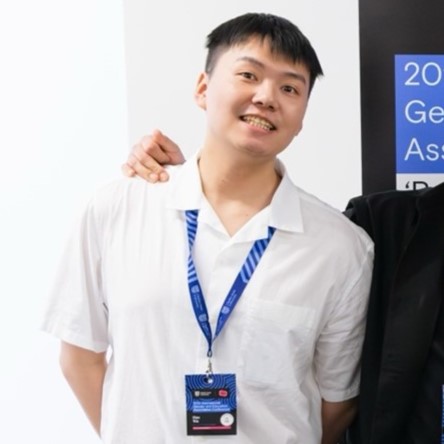
I am deeply grateful to Charles Sturt University for the bursary that allowed me to attend and present at the 2024 Gender and Education Association (GEA) Conference. As a fourth-year PhD student in Human Geography at University College London, my research focuses on the intersection of gender, space (including educational contexts), and digital technologies, with a particular emphasis on increasing the visibility of queer identities in public spaces in China. Presenting my work at GEA2024 was not only a milestone in my academic journey but also a valuable opportunity to connect with a global academic community dedicated to addressing gender inequality in education.
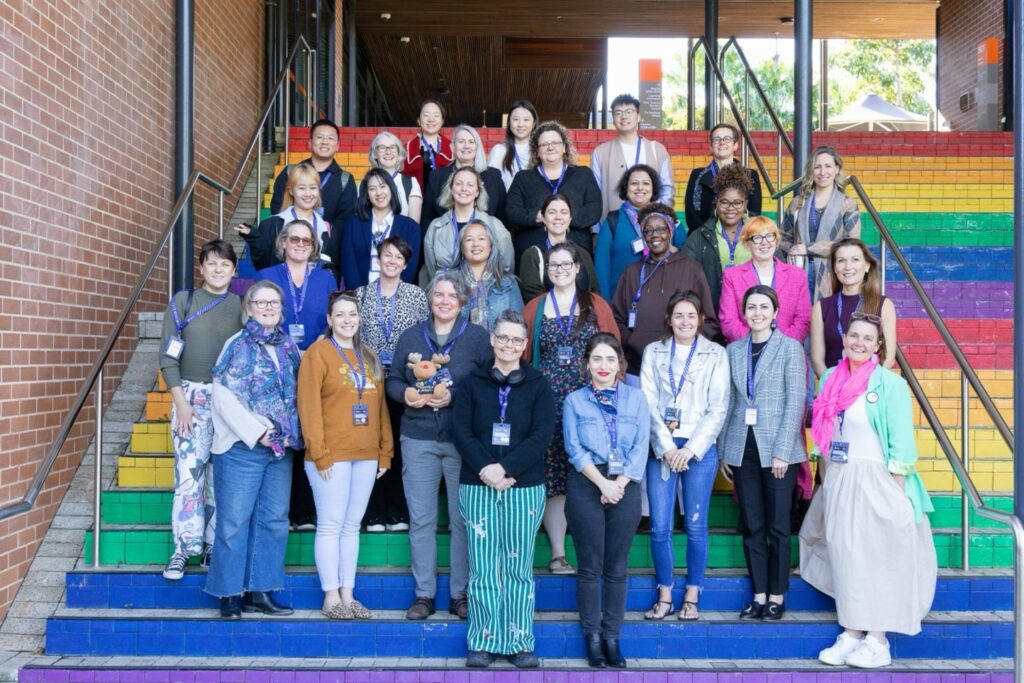
(GEA 2024 Group photo of participants)
Globally, gender inequality in education remains a significant and persistent issue, affecting individuals and communities across various contexts. My presentation at GEA2024 delved into the specific challenges faced by queer men in China, focusing on how they navigate and express their identities within school environments that are often governed by strict societal norms and institutional surveillance. The theme “Be the Change” resonated deeply with my research, as it underscores the urgent need to address these entrenched inequalities. In my study, I explored how these individuals create spaces of resistance and affirmation within the confines of educational institutions, challenging the normative structures that seek to marginalize them. The change required is not merely incremental; it demands a rethinking of how educational spaces can become sites of empowerment rather than oppression.
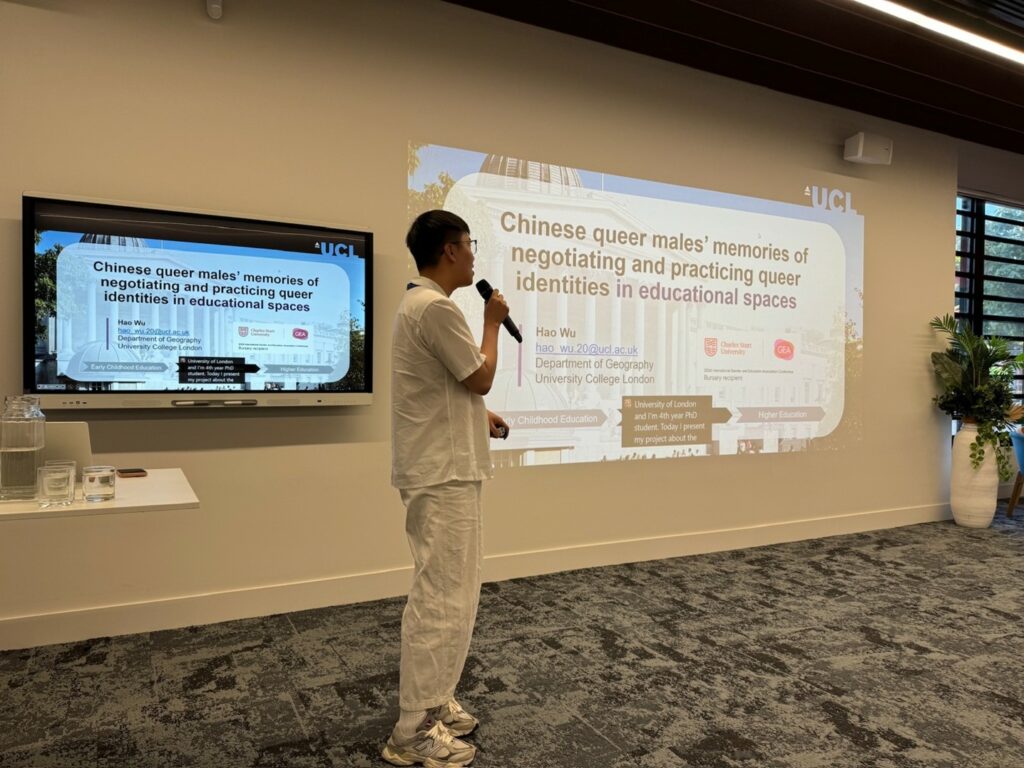
(Hao presenting his research at the conference)
At GEA2024, I had the privilege of participating in a symposium where we collectively explored gender inequalities within Chinese educational spaces at various stages of the educational lifecycle. Together, we were committed to understanding and addressing the persistent gender issues in educational environments, from early childhood to higher education. We examined how gender inequalities are perpetuated through institutional practices and societal norms in China, and how students at different educational stages—whether in primary, secondary, or higher education—exercise agency in negotiating and addressing these challenges. The feedback and insights I received from fellow panellists and attendees were invaluable, providing new perspectives and directions for my ongoing research.
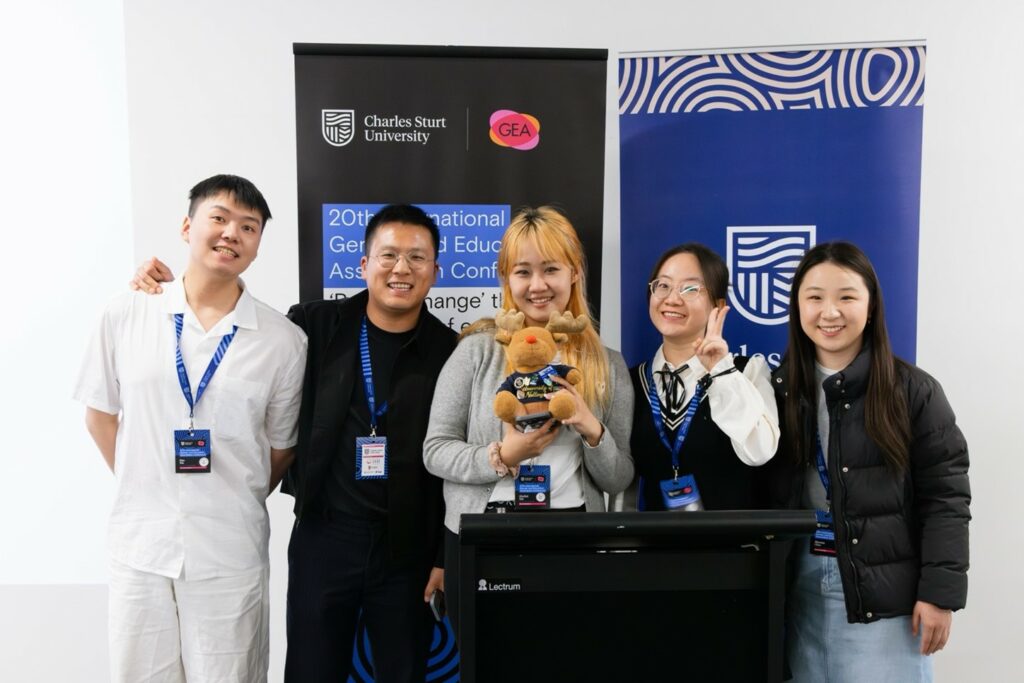
(The Panellists)
As an interdisciplinary early career scholar in Human Geography, I felt welcomed and included at GEA2024. The conference served as a hub for knowledge exchange, allowing me to connect with gender and education scholars from around the world. These interactions were incredibly valuable, affirming the significance of our research focus and inspiring the direction of my future work. Specifically, after attending GEA2024, I am more committed than ever to using education as a tool for social change. I plan to continue my research on gender issues in educational spaces and to develop more inclusive research methodologies. Additionally, I aim to use my teaching and research to help create a more equitable educational environment, ensuring that marginalized groups receive the support and respect they deserve.
Hao Wu is a PhD candidate in Human Geography at University College London(UCL), with research interests across three subject areas of identity, media, and space. Hao’s research primarily focuses on how mobile digital technologies empower the social practices of Chinese queer communities. Hao also served as a Postgraduate Teaching Assistant for the BA/MA Media programs at UCL.
Hao Wu UCL Profile : https://www.ucl.ac.uk/geography/hao-wu
Recent Blog: https://www.ucl.ac.uk/geography/news/2024/jun/exploring-hybrid-queer-spaces-china-study-hao-wu